
Does Circumcision Hurt? Infant Circumcision Pain Explained by a Mohel
One of the first questions parents ask me is simple and heartfelt:
“Does circumcision hurt my baby?”
This is an important question, and it deserves an honest answer. Concerns about infant circumcision pain are completely understandable. Circumcision is a real physical experience, but when it is performed by an experienced mohel using swift, gentle techniques and modern pain-reduction measures, most babies experience only brief discomfort and settle quickly afterward.
As a practicing mohel, this question comes up more than almost any other. It is usually followed by:
“How much pain will he feel?”
“How do you keep him comfortable?”
“What do you do to make the circumcision as gentle as possible?”
These questions come from love, protectiveness, and responsible parenting. Whether a family is Jewish and preparing for a Bris Milah, or not Jewish and seeking a home or office-based newborn circumcision, parents want clarity. They want to know what their baby will feel, how discomfort is minimized, and what to expect before, during, and after the procedure.
My goal is always the same: to provide your baby with a safe, gentle circumcision experience, and to give you peace of mind through clear, straightforward guidance.
This article brings together both sides of my work: the religious meaning of Bris Milah and the practical medical realities of infant circumcision, pain control, and newborn comfort. I want to explain what actually happens, how babies typically respond, and how I work carefully to minimize discomfort throughout the process.
Infant Circumcision Pain: What Parents Should Know
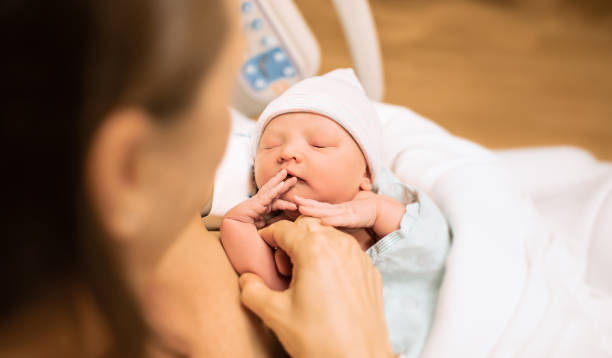
Parents often worry about infant circumcision pain, especially when imagining what their newborn might experience during and after the procedure.
In reality, while circumcision does involve brief discomfort, most babies tolerate it very well when it is done thoughtfully and efficiently. A common misconception is that all crying during a circumcision reflects pain from the circumcision itself.
Newborns cry for many reasons. Being unwrapped, feeling cold, being repositioned, or being briefly restrained often causes more fussiness than the circumcision itself.
The circumcision takes only moments. Most babies calm quickly once they are wrapped, held, and soothed again.
Parents frequently say afterward:
“I can’t believe how quickly he calmed down.”
“He fell asleep almost right away.”
“I expected it to be much worse than it was.”
These reactions are common and reassuring.
Do Babies Feel Pain During Circumcision? What the Research Shows
Medical research clearly shows that newborns are capable of feeling pain. At the same time, research also shows that pain can be significantly reduced through proper technique, timing, and layered comfort measures.
Studies consistently demonstrate that combining gentle handling, local pain relief, and soothing techniques leads to significantly lower signs of distress during circumcision. Crying alone is not a reliable measure of pain, especially in newborns.
What matters most is how the circumcision is performed, how long it takes, and how well the baby is supported before, during, and after the procedure.
Experience and technique matter.
How Pain Is Minimized During Infant Circumcision
 Pain control is not a single intervention. It is a combination of small, intentional steps that work together.
Before the Procedure: Comfort, Warmth, and Oral Sucrose
Comfort begins before the circumcision itself.
I keep the baby:
-
warm
-
swaddled until the last moment
-
minimally stimulated
-
supported and calm
During a traditional Jewish Bris Milah, a baby is given a cloth lightly dipped in sweet red wine to suck on. For non-Jewish home or office-based circumcisions, I use a sugar or glucose solution.
Sweet solutions help newborns self-soothe and reduce visible distress when combined with other pain-reduction measures. While they are not a replacement for local anesthesia, they are a well-recognized adjunct that meaningfully enhances overall comfort.
2. During the Procedure: Gentle Handling, Precise Technique, and Speed
My circumcision technique is intentionally:
-
quick
-
smooth
-
controlled
-
gentle
The circumcision itself takes seconds. I work with practiced, steady movements that minimize stimulation. I avoid prolonged clamping and unnecessary handling, which are common contributors to distress in hospital settings.
Mohels are trained specifically to work with infants, with an emphasis on efficiency, precision, and minimal handling. Parents are often surprised by how brief the key moment is and how little reaction their baby shows during it.
Parents often comment afterwards on:
-
how much faster the procedure was than what they expected.
-
how little their baby reacted during the key moment.
-
how quickly their baby settled down.
3. After the Procedure: Lidocaine-Infused Bandage
Immediately after performing the circumcision, I apply a lidocaine-infused bandage, which provides localized pain relief during the early healing period and helps reduce post-procedure discomfort.
Parents regularly observe:
-
their baby settling immediately
-
normal feeding
-
falling asleep shortly afterward
-
calm behavior in the hours following the bris
This response is typical and reassuring.
4. Optional Pain Relief at Home: When Infant Tylenol Is Helpful
Every family receives a clear infant Tylenol dosing chart. Most parents never need to use it, but I want every family to feel prepared.
For the small number of babies who may be a bit fussier several hours later, a small dose of infant Tylenol can be very effective in easing discomfort.
Bris Milah and Circumcision: Religious or Medical Procedure?
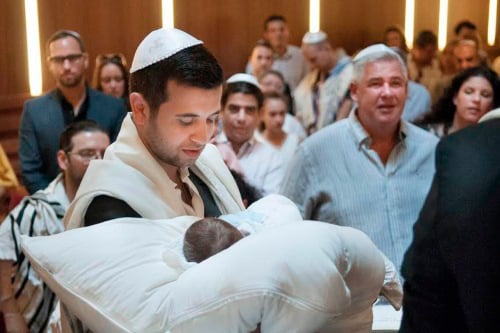
For Jewish families, a Bris Milah is far more than a medical procedure. It is a deeply meaningful spiritual moment that connects parents and child to thousands of years of Jewish tradition.
I approach this responsibility with seriousness and care. The ceremony is warm, family-centered, and uplifting. I guide families through each step while ensuring the circumcision itself is performed gently and professionally. The baby then receives his Jewish name and receives blessings from the Mohel and/or Rabbi. The Bris Milah is a joyous occasion in Jewish households, celebrated by sharing a festive meal with loved ones after the Bris Milah ceremony.
For non-Jewish families, the same circumcision technique is used without the religious ceremony. Every baby receives the same level of skill, gentleness, and aftercare. Families receive a complete care package with diapers, gauze, ointment, and clear written instructions. I often joke that I provide everything except the baby.
Vitamin K and Circumcision Pain and Safety
The topic of vitamin K comes up often, especially for families who are planning an outpatient circumcision.
Hospitals typically require the vitamin K injection before performing a circumcision. When families decline it, hospitals often refuse to proceed, which leads parents to seek an experienced mohel familiar with these situations.
My approach is individualized:
-
I review any relevant family history of bleeding or clotting disorders.
-
I assess the baby’s overall health.
-
I evaluate timing and clinical presentation.
In the overwhelming majority of cases, it is safe to proceed with circumcision even for babies who did not receive the vitamin K injection.
—
It is important to note a critical difference between Hospital Circumcision and Outpatient Circumcision:
Hospitals typically perform circumcisions within the first few days of life, when a newborn’s vitamin K–dependent clotting factors are at their lowest. For this reason, hospitals generally require vitamin K before proceeding.
By the second week of life, an infant’s own vitamin K–dependent clotting activity has begun to increase naturally. When there is no family history of bleeding disorders, no clinical signs of abnormal bleeding, and the circumcision is performed later rather than in the first days of life, overall bleeding risk is lower than it would be in the immediate newborn period.
This difference in timing is an important reason why hospital policies and outpatient circumcision practices are not always directly comparable.
The hospital insists on performing the circumcision only during the first few days of life, when the Vitamin K is lowest, and therefore also insists on performing circumcisions only for families that provide their babies with the Vitamin K intramuscular shot.
Aftercare: Clear Instructions and Ongoing Support

One of the greatest sources of peace for parents is knowing exactly what to expect afterward.
Before you leave, I review:
-
how to care for the area
-
what normal healing looks like
-
how much bleeding (very minimal) is normal
-
what changes to expect over the next few days
-
when and how to contact me
My aftercare instructions are straightforward and simple to follow.
Equally important, I remain available after the circumcision. Parents are encouraged to call, text, or send photos with any questions. No family should ever be left wondering whether something is normal.
A Reassuring Note for Parents
Every family wants the same thing: a gentle experience for their baby and clear, reliable guidance.
Circumcision can feel overwhelming, whether it’s part of a Jewish Bris Milah, a Christian observance, a Muslim tradition, or a non-religious decision. You don’t have to navigate any of it alone.
I have been performing circumcisions for over a decade without incident. My approach reflects both longstanding tradition and modern understanding of newborn pain. While circumcision is a real physical experience, it can be performed thoughtfully, gently, and with effective measures to minimize discomfort.
My role is to guide you, answer your questions honestly, and support you before and after the procedure so that you always know what to expect.
References and Further Reading
-
Rossi S, Buonocore G, Bellieni CV. Management of pain in newborn circumcision: a systematic review. European Journal of Pediatrics. 2021;180(1):13–20.
Available at: https://www.ncbi.nlm.nih.gov/pmc/articles/PMC7782363/ PubMed -
Sharara-Chami R, Lakissian Z, Charafeddine L, et al. Combination analgesia for neonatal circumcision: a randomized controlled trial. Pediatrics. 2017;140(6):e20171935.
Available at: https://pubmed.ncbi.nlm.nih.gov/29117910/ PubMed -
Stevens B, Yamada J, Ohlsson A, Haliburton S, Shorkey A. Sucrose for analgesia in newborn infants undergoing painful procedures. Cochrane Database of Systematic Reviews. 2016;7:CD001069.
Available at: https://www.cochranelibrary.com/cdsr/doi/10.1002/14651858.CD001069.pub5/full Cleveland Clinic -
Bellieni CV, Alagna MG, Buonocore G. Analgesia for infants’ circumcision. Italian Journal of Pediatrics. 2013;39:38.
Available at: https://www.ncbi.nlm.nih.gov/pmc/articles/PMC3702488/ PubMed -
Sinkey RG, Eschenbacher MA, Walsh PM, et al. The GoMo study: a randomized clinical trial assessing neonatal pain with Gomco vs Mogen clamp circumcision. American Journal of Obstetrics and Gynecology. 2015;212(5):664.e1–664.e8.
Available at: https://pubmed.ncbi.nlm.nih.gov/25817099/ PMC -
Taeusch HW, Martinez AM, Partridge JC, Sniderman S, Armstrong-Wells J, Fuentes-Afflick E. Pain during Mogen or Plastibell circumcision. Journal of Perinatology. 2002;22(3):214–221.
Available at: https://pubmed.ncbi.nlm.nih.gov/12082466/ AAP Publications -
American Academy of Family Physicians. Newborn circumcision techniques. American Family Physician. 2020;101(11):680–684.
Available at: https://www.aafp.org/pubs/afp/issues/2020/0601/p680.html AAFP -
HealthyChildren.org (American Academy of Pediatrics). Where We Stand: Vitamin K.
Available at: https://www.healthychildren.org/English/safety-prevention/immunizations/Pages/Vitamin-K.aspx HealthyChildren.org -
Mayo Clinic. Vitamin K in newborns: Why it is important.
Available at: https://www.mayoclinic.org/healthy-lifestyle/infant-and-toddler-health/expert-answers/vitamin-k-shot/faq-20058360 HealthyChildren.org -
Children’s Hospital of Philadelphia. Vitamin K and the Newborn: What Parents Need to Know.
Available at: https://www.chop.edu/news/health-tip/vitamin-k-newborns-what-parents-need-know Children’s Hospital of Philadelphia -
Cleveland Clinic. Why Is My Baby Crying?
Available at: https://health.clevelandclinic.org/why-is-my-baby-crying/ Cleveland Clinic